
https://live.staticflickr.com/65535/51699413054_d804e4ed7b_b.jpg
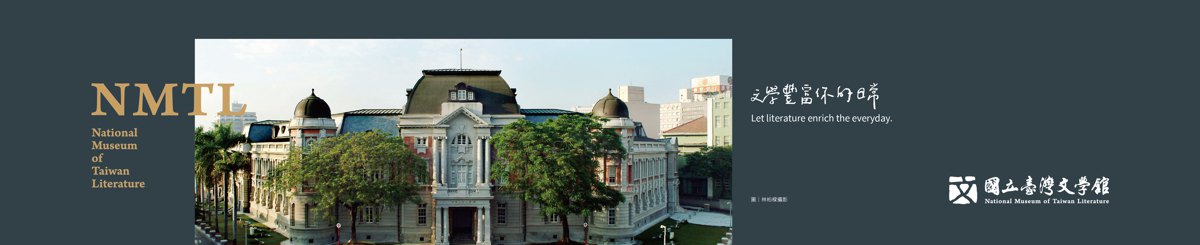
Source: "Cha̍p-hāng Koán-kiàn" (Ten Guanjian), published in 1925, collected by the National Museum of Taiwan Literature. In order to promote the national cultural movement, Cai Peihuo was aware of the limitations of Chinese learning at the time and Japanese was not the native language of Taiwanese. Therefore, he advocated church Roman characters as written characters and used Pinyin as his native language to guide the public to read knowledge and absorb new knowledge.
"Cha̍p-hāng Koán-kiàn" is his practice. It is a commentary prose on the past to know the present, and Taiwan also talks about the world. It is also the first officially published vernacular prose in the history of Taiwanese literature and has important historical significance. Writer: Cai Peihuo (1889-1983), a native of Beigang, Yunlin. He was a member of the Taiwan Cultural Association and the Taiwan People's Party. He later formed the Taiwan Local Self-Government League and served as "Taiwan Youth", "Taiwan", and "Taiwan Min Daily" "Editor and publisher.
During the Japanese rule, he devoted himself to Taiwan's democratic self-government movement, dedicated to the establishment of the Taiwan parliament petition, the publication of the "Taiwan Xinmin Daily", and the popularization and education of Taiwanese vernacular characters. The proposition that "Taiwan is the Taiwan of the Taiwanese" is the central idea of the Taiwan national movement.
-------------------------------------------------- -------------------------------------------------- -
https://live.staticflickr.com/65535/51697945647_4e344c8177_b.jpg
|About product material|
"Friendly environment"
From zero to zero, commodities should return to the earth
Paper fiber cloth woven from 61% FSC (non-virgin forest) pulp and 39% cotton
Replace the large amount of industrial oil used in the weaving process of general fabrics with water
It is lighter than canvas and has the same load characteristics
Does not contain any recycled PET ingredients
Decomposes naturally in the ground
Today when everyone talks about a friendly environment
While thinking about the design, we hope to choose materials that will not pollute the environment as the product materials.
Hope to implement the brand concept from 0 to 0
Eco-friendly From zero to zero, let products back to earth. The producing process of paper fiber fabric which is made of 61% FSC paper pulp and 39% cotton fiber replacing large amount of usage of industrial oil by water. The fabric is lighter than canvas but bears more weights. It can be decomposed back to earth. When we design our products, we choose these green materials hopefully preventing our earth from unnecessary pollution. Therefore,
the brand of our products are positioned as “from zero to zero”.
https://live.staticflickr.com/65535/51699016718_cde1154268_b.jpg
Material|Paper fiber, leather
Size|H 35cm x W 34cm x D 3cm
Partners|ZERO GRAM
-------------------------------------------------- -------------------------------------------------- -


รายละเอียดสินค้า
ข้อมูลสินค้า
- วัสดุสินค้า
- กระดาษ
- วิธีการผลิตสินค้า
- ผลิตโดยโรงงาน
- แหล่งผลิตสินค้า
- ไต้หวัน
- จุดเด่นของสินค้า
- Eco-Friendly
- จำนวนในสต๊อก
- เหลือเพียง 8 ชิ้น
- อันดับสินค้า
- No.23,054 - กระเป๋า | No.4,428 - กระเป๋าถือ
- ความนิยม
-
- ถูกชม 3,528 ครั้ง
- มี 13 คนถูกใจ
- สินค้าที่จำหน่าย
- สินค้าต้นฉบับ
- รายละเอียดย่อยของสินค้า
- This idea comes from Cai Peihuo's "CHA̍P-HĀNG KOÁN-KIÀN" from the collection of the National Taiwan Literature Museum (Ten Insights)
ค่าจัดส่งและรายละเอียดอื่นๆ
- ค่าจัดส่ง
- วิธีชำระเงิน
-
- บัตรเครดิต/เดบิด
- อินเตอร์เน็ตแบงก์กิ้ง/โมบายแบงค์กิ้ง
- เคาน์เตอร์เซอร์วิส
- ตู้เอทีเอ็ม
- เคาน์เตอร์ธนาคาร
- Alipay
- การคืนเงินและเปลี่ยนสินค้า
- อ่านรายละเอียดการคืนเงินและเปลี่ยนสินค้า
- แจ้งปัญหา
- รายงานสินค้าชิ้นนี้