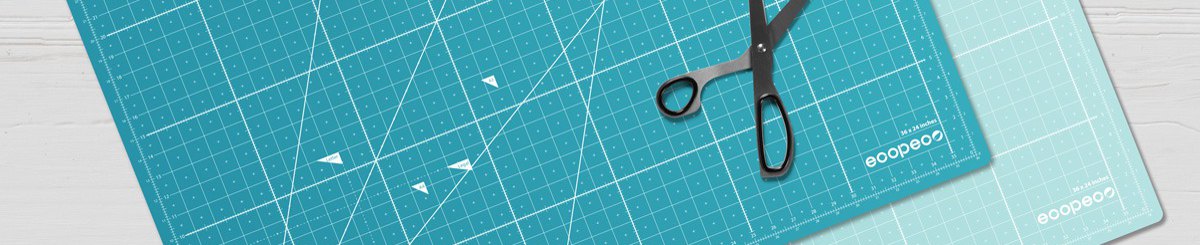

Product Model: Professional Double-Sided Eco-Friendly Cutting Mat
Material: Safe Material TPE + PP
(Does not use PVC, plasticizers, or heavy metals)
Product Origin: Taiwanese Materials, Made in Taiwan
Available in two different colors:
1) Transparent white (translucent)
2) black
Available in three different sizes:
1) 60*90cm (A1)
2) 40*60cm (A2)
3) 30*45cm (A3)
Suitable for: Handicrafts, Art, Leather Crafting, Carving, Metalworking
Purpose: Protects tabletops, protects cutting tools
Double-sided printing - usable on both sides
Packaging:
Delivery: Shipped flat in a sturdy cardboard box
✅ Made from non-toxic, food-grade polypropylene, not harmful PVC. If you are pregnant, nursing, or need items for children, we recommend choosing safe materials free from plasticizers and heavy metals, tested for safety.
✅ Offers superior cutting performance. The ecopeco cutting mat is specially designed for repeated use. Its 5-layer construction is resistant to cuts and slices, with a self-healing elastic surface that conceals cut marks, all while protecting your desk and knives like new.
✅ No unpleasant plastic odor. Does that terrible new cutting mat smell give you headaches? Our mats are completely free of chemical odors! Absolutely odorless, so you can craft, cut, or sew without health concerns.
✅ Long-lasting, fade-resistant printed grid— As a professional artist, a fading grid can hinder your efficiency. The ecopeco cutting mat features a fade-resistant grid that stays looking great even after months and years of use.
✅ Convenient flat packaging --> We do not ship our mats rolled up. This ensures you can use them immediately upon arrival without the hassle of flattening, and you won't have to worry about deformation!
Are you still using PVC desk mats/cutting boards?
Did you know that PVC is listed as the lowest-grade plastic by environmental groups?
From manufacturing to disposal, chlorine-containing PVC releases dioxins and other toxins harmful to both people and the environment.
Plasticizers added to make PVC more flexible create endocrine disruptors, which are also harmful chemicals that can interfere with the human endocrine system, leading to cancer and changes in the immune and nervous systems.
Since desk mats are among the stationery items with the longest contact time with the human body, stricter oversight is necessary.
🔍 Material Introduction 🔍
📣 Quick Facts about PVC:
Hazards of PVC
I. Hazards of Plasticizers
Before PVC is manufactured into various finished products, different amounts of plasticizers are added based on the required flexibility. Generally, semi-rigid PVC requires 10-30% plasticizer, while soft PVC requires 30-70%. For instance, medical supplies typically contain 20%-40% plasticizer, and items like cling film, IV tubing, or IV bags can contain over 70% plasticizer, effectively meaning the PVC is immersed in additives.
There are many types of PVC plasticizers, but the most common group is called phthalates. Among these, "di(2-ethylhexyl) phthalate" (DEHP) is used the most.
DEHP is a reproductive and developmental toxin that significantly impacts the developing male reproductive system, meaning infants and children are at greater risk than adults. Doses that may not affect adults can be considerably threatening to children. Furthermore, MEHP, a metabolite of DEHP, can damage Sertoli cells in the testes, causing cellular abnormalities and impairing fertility. DEHP may also lead to blood clots and can harm the liver and lungs. Besides DEHP, other phthalates generally affect reproductive health, including reduced fertility, miscarriage, birth defects, abnormal sperm counts, testicular damage, and an increased risk of liver and kidney cancer.
PVC toys pose a significant threat to children's health. Young children in the oral stage may ingest DEHP and other plasticizers from PVC toys by licking them. Consequently, many countries have banned PVC toys containing DEHP and other plasticizers, or even banned PVC toys altogether, like Germany. In January 2006, the European Union issued a directive (2005/84/EC) prohibiting the use of six types of phthalate plasticizers, including DEHP, DBP, BBP, DINP, DIDP, and DNOP, in toys.
II. Hazards of Stabilizers
PVC is not resistant to light and heat. Under the influence of light and heat, it releases free radicals of chlorine, leading to material degradation. Therefore, stabilizers are added to capture these free radicals. Commonly used stabilizers include metal salts such as lead, cadmium, zinc, barium, and tin. These metals can leach from PVC products, harming human health. Chronic or acute exposure to lead can cause neurological disorders in children, impede their intellectual development, lead to reproductive issues in women, and may be carcinogenic. Cadmium can impair kidney function and may cause lung cancer.
Numerous studies have confirmed that these heavy metals can leach from PVC products. For example, research has found that PVC toys can leach lead and cadmium (DiGangi 1997). Lead-containing PVC plastic blinds, under prolonged sun exposure, eventually degrade and release lead, resulting in higher blood lead levels in children living in homes with PVC blinds. Lead-containing PVC water pipes also leach lead, contaminating drinking water (DTI 1995).
Organic tins (like dibutyltin), used as alternatives to lead and cadmium, are also toxic and can leach from PVC products. Organic tins can affect the central nervous system, skin, liver, immune system, and reproductive system. For instance, dibutyltin is a potent developmental toxin and teratogen. Tributyltin can affect the nervous system and, in animal studies, has been found to impact reproduction and development. (Source: Bad news comes in three, CHEJ)
📣 Quick Facts about TPE:
TPE materials are environmentally friendly and non-toxic, not producing endocrine disruptors. In recent years, TPE materials have been widely used in food packaging, kitchenware, tableware, medical supplies, and baby products, indicating their safety.
TPE offers non-slip and wear-resistant properties. It possesses the following characteristics:
1. Superior Feel: High strength; high elasticity; high flexibility; delicate and smooth; dust-repellent.
2. Excellent Performance: UV resistant; aging resistant; acid and alkali resistant; fatigue resistant.
3. Easy to Process: Good fluidity; lightweight; easy to color.
4. Green and Eco-Friendly: Meets FDA (n-hexane) and LFGB (olive oil) testing standards.
5. Application Fields: Baby products; medical supplies; tableware; daily necessities; and other eco-friendly plastic materials.
📣 Quick Facts about PP:
PP material is polypropylene. It is a type of resin, a linear polymer with high density, no side chains, and high crystallinity, offering excellent overall performance. The advantages of PP material in terms of performance are its resistance to solvents, oils, weak acids, and alkalis, surpassing other engineering plastics. During its production, the processing temperature is approximately 180-240 degrees Celsius. At such high temperatures, its chemical composition remains stable. Therefore, when made into plastic cups, even with boiling water or high-temperature heating in a microwave, PP material products do not decompose.
For this reason, most food containers currently use PP as their primary material.


รายละเอียดสินค้า
ข้อมูลสินค้า
- วัสดุสินค้า
- พลาสติก
- วิธีการผลิตสินค้า
- ผลิตโดยโรงงาน
- แหล่งผลิตสินค้า
- ไต้หวัน
- จำนวนในสต๊อก
- มากกว่า 10 ชิ้น
- อันดับสินค้า
- No.40,497 - เครื่องเขียน | No.757 - อุปกรณ์เขียนอื่นๆ
- ความนิยม
-
- ถูกชม 6,866 ครั้ง
- จำหน่ายไปแล้ว 3 ชิ้น
- มี 54 คนถูกใจ
- สินค้าที่จำหน่าย
- สินค้าต้นฉบับ
- รายละเอียดย่อยของสินค้า
- Professional Double-Sided Eco-Friendly Cutting Mat Made with Taiwanese Materials in Taiwan Safe Material: TPE + PP (Does not use PVC, plasticizers, or heavy metals)
ค่าจัดส่งและรายละเอียดอื่นๆ
- ค่าจัดส่ง
- วิธีชำระเงิน
-
- บัตรเครดิต/เดบิด
- อินเตอร์เน็ตแบงก์กิ้ง/โมบายแบงค์กิ้ง
- เคาน์เตอร์เซอร์วิส
- ตู้เอทีเอ็ม
- เคาน์เตอร์ธนาคาร
- Alipay
- การคืนเงินและเปลี่ยนสินค้า
- อ่านรายละเอียดการคืนเงินและเปลี่ยนสินค้า
- แจ้งปัญหา
- รายงานสินค้าชิ้นนี้