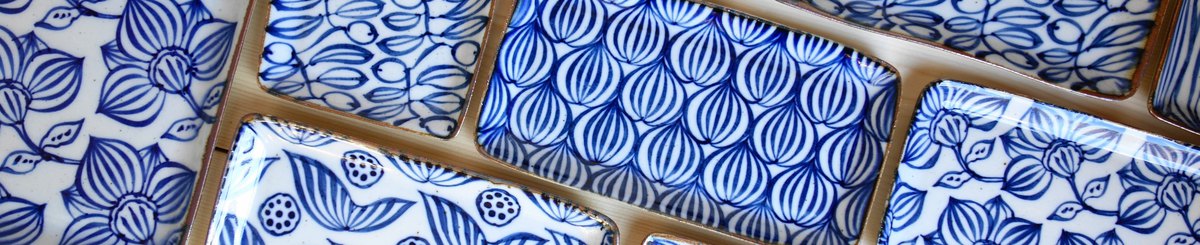

Lotus shaped rectangular tray.
Lotus has long been used as an auspicious pattern for prosperous offspring because it bears many fruits.
We mixed two types of soil, applied the clay that gave out the earthy taste to the mold, and slowly beat it by hand.
The paintings are painted point by point in a technique called dyeing.
To finish, I paint iron paint on the edge and make it an accent.
Because it is painted in dark blue eyes, it does not become too Japanese-style, it goes well with any table.
As a small dish, if it is Japanese food, sashimi and fried eggs, and if it is a Western food, it will be suitable for dishes without juice, such as caprese and bruschetta.
・ Contents: One
-Material: pottery
-Size: about horizontal 190 ~ 195mm × vertical about 100 to 105mm × about 14 to 19mm in height
■ About delivery time
Please contact us if you are in a hurry, as you may be absent from the event.
■ Notes on purchase
1. Range ○ Dishwasher ○ Steamed food ○ Frozen storage ○ Oven × Open flame ×
Be careful of rapid heating and quenching because they are weak to sudden temperature changes.
2. Please wash and dry immediately after use. It causes mold.
3. Some of the surface may look like cracks. This is called "crust" and occurs during firing due to the difference in shrinkage between glaze and soil. It is easy to infiltrate the colors such as tea and soup into the penetration, and the pattern changed by the year has been loved by the tea people as a "scenery" of the pottery from old times.
If you are concerned, you can get closer to the original by using tableware bleach etc.
4. Rinse with water each time before use to make it difficult for stains and odors to penetrate.
5. There is a rare color that is slightly reddish or pinkish, but this is called Ohon (Gohon), and the iron in the soil is colored red during firing.
It is highly incidental, and it is an interesting reaction that differs in the way of appearance even when fired under the same conditions. Of course, there is no problem in use.
Kiki Kiku's story is produced assuming a casual everyday use.
Although all items are carefully inspected, in rare cases, catatsuki, rough edges, distortion, pinholes (air holes), and smearing of paint are observed.
In addition, the difference in painting by brushing, the difference in shape by manual work, and the presence or absence of a book by peeping also differ one by one.
We hope that you enjoy it as a feature of ceramic making that is not found in industrial products including them.


รายละเอียดสินค้า
ข้อมูลสินค้า
- วัสดุสินค้า
- ดินเหนียว
- วิธีการผลิตสินค้า
- แฮนด์เมด
- แหล่งผลิตสินค้า
- ญี่ปุ่น
- จำนวนในสต๊อก
- เหลือเพียง 0 ชิ้น
- อันดับสินค้า
- No.31,693 - เครื่องใช้ในครัว | No.2,812 - จานและถาด
- ความนิยม
-
- ถูกชม 2,717 ครั้ง
- จำหน่ายไปแล้ว 2 ชิ้น
- มี 10 คนถูกใจ
- สินค้าที่จำหน่าย
- สินค้าต้นฉบับ
- รายละเอียดย่อยของสินค้า
- Small one-piece dish easy to match any dish
ค่าจัดส่งและรายละเอียดอื่นๆ
- ค่าจัดส่ง
- วิธีชำระเงิน
-
- บัตรเครดิต/เดบิด
- อินเตอร์เน็ตแบงก์กิ้ง/โมบายแบงค์กิ้ง
- เคาน์เตอร์เซอร์วิส
- ตู้เอทีเอ็ม
- เคาน์เตอร์ธนาคาร
- Alipay
- การคืนเงินและเปลี่ยนสินค้า
- อ่านรายละเอียดการคืนเงินและเปลี่ยนสินค้า
- แจ้งปัญหา
- รายงานสินค้าชิ้นนี้